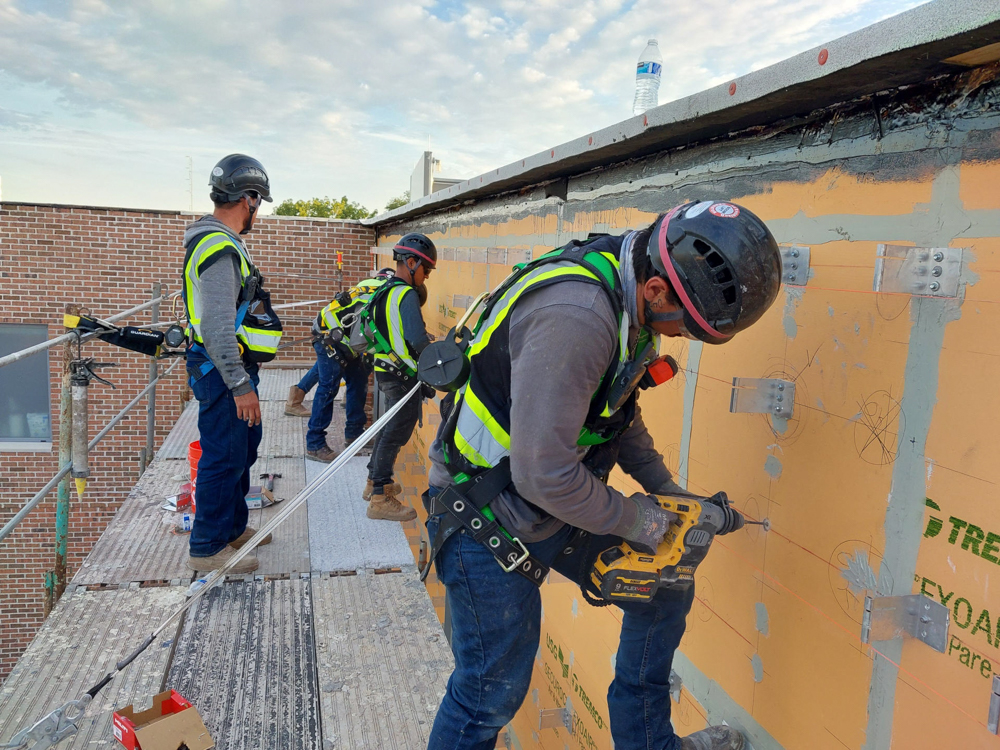
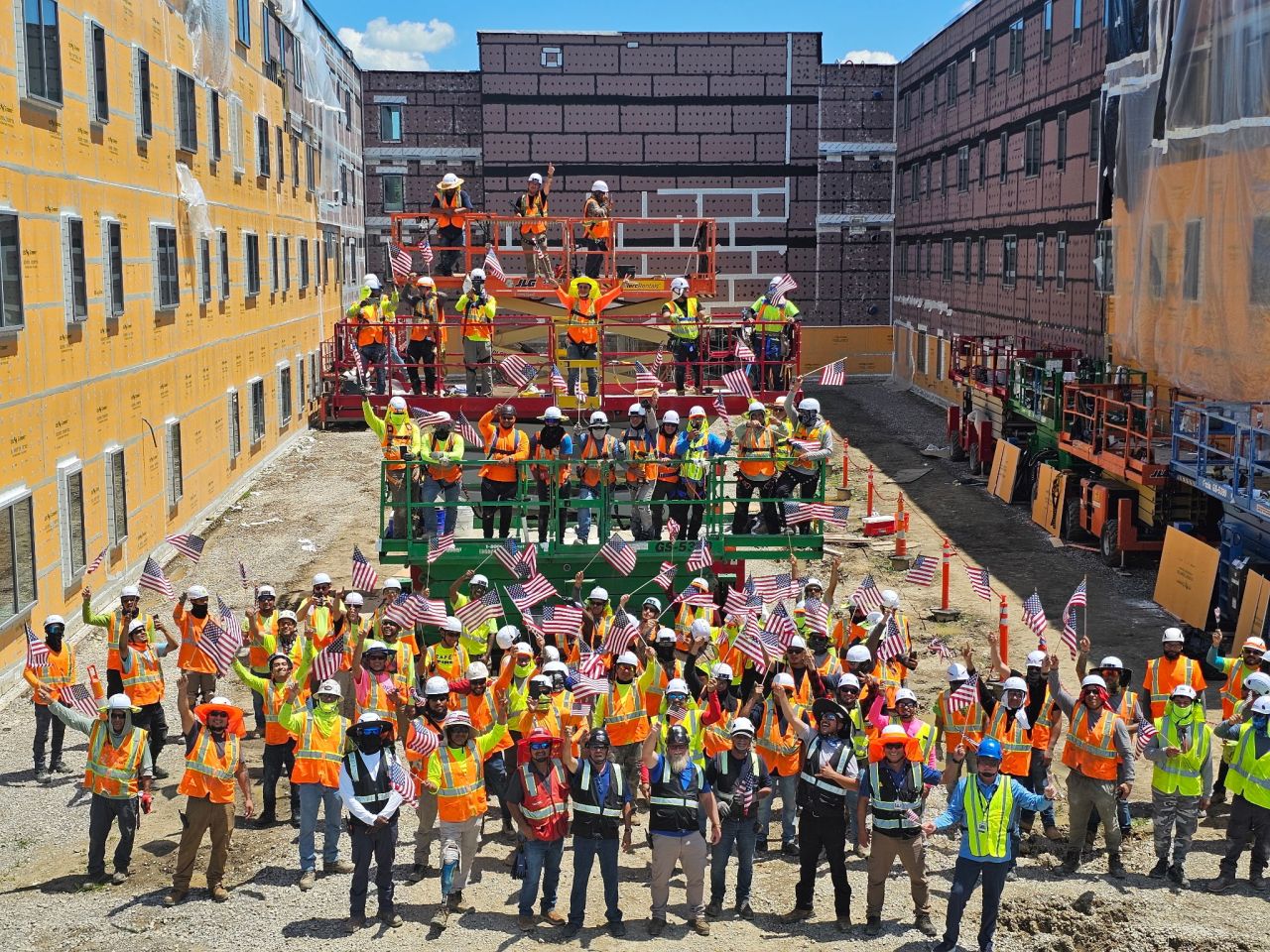
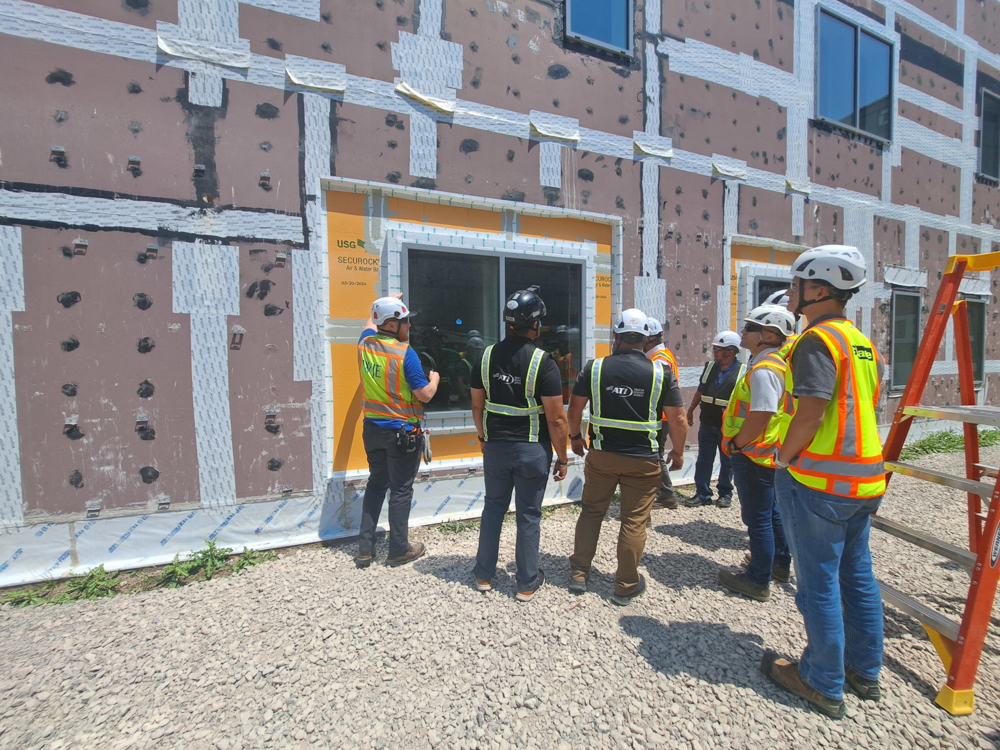
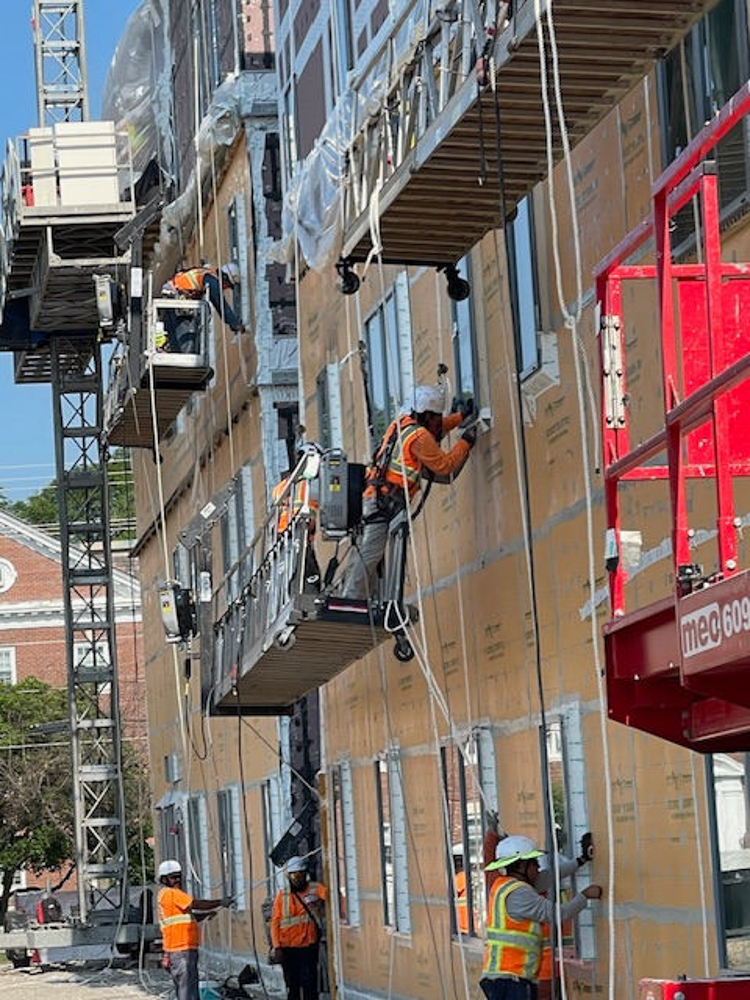
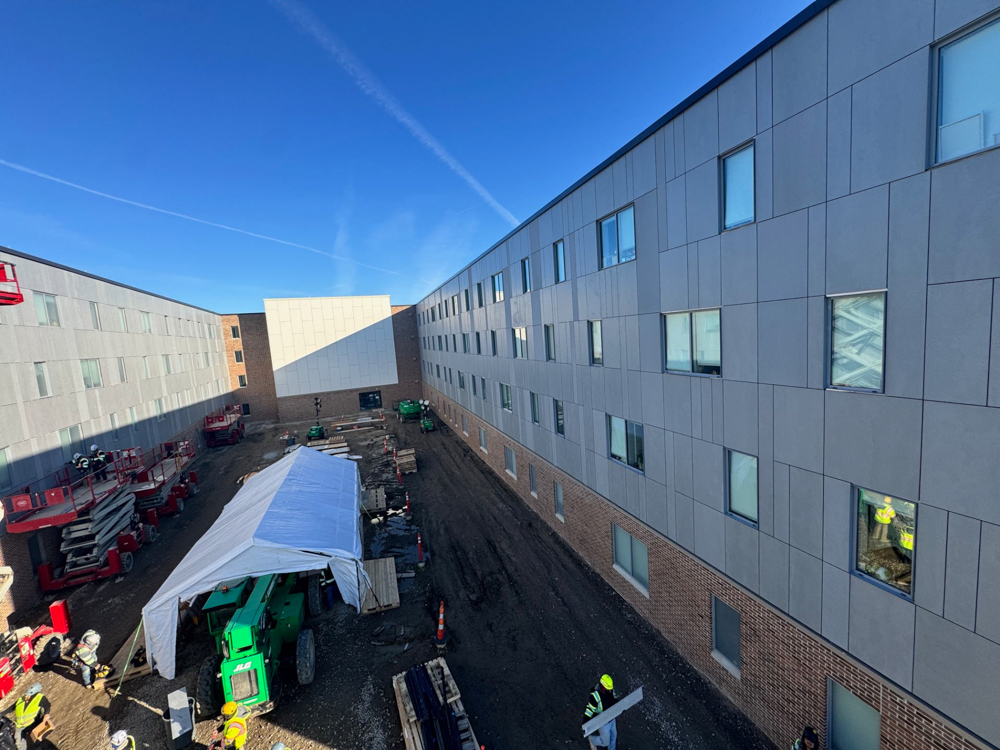
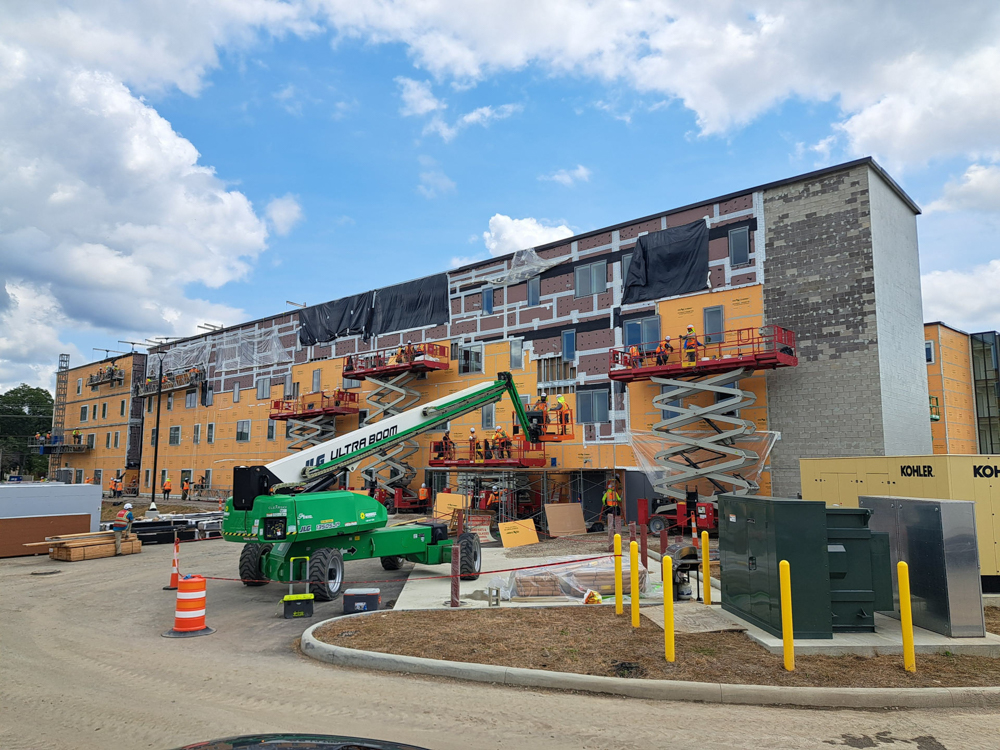
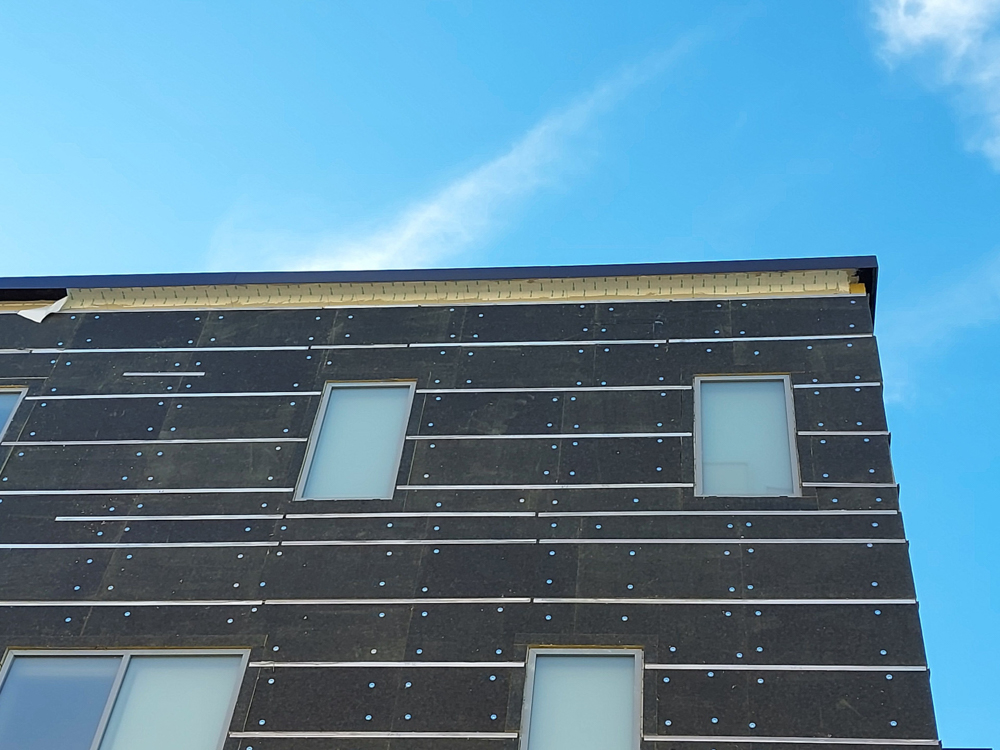
This project presented several compounding challenges that made execution especially complex. The building remained on an active campus with zero flexibility on completion dates tied to student occupancy. Phase 1 required removal of approximately 75,000 square feet of exterior substrate while coordinating around 386 pre-installed windows. Phase 2 introduced extreme precision requirements, blueprint drawings that were found unreliable, winter weather conditions, and significantly reduced laydown space. Both phases demanded large-scale manpower, simultaneous trade coordination, strict manufacturer tolerances, and continuous safety oversight—all while avoiding delays that could have resulted in costly student relocation.
ATI completed Phase 1 two and a half weeks ahead of schedule and Phase 2 five days early, enabling on-time student occupancy and eliminating the need for temporary housing. The $13M reconstruction delivered a durable, warrantable exterior envelope while mitigating future water damage risk. Across more than 35,000 man-hours, the project achieved zero recordable injuries and no OSHA violations—demonstrating ATI’s ability to safely execute complex reconstruction under extreme schedule and technical constraints.
ATI Solutions
ATI rapidly mobilized manpower, equipment, and materials upon project approval to stay ahead of schedule. Crews worked extended hours across parallel work streams, enabling multiple areas of the building to be worked on simultaneously. With selective demolition and installation underway, continuous field verification resolved unreliable drawings, while test areas and real-time collaboration with engineers and manufacturers addressed window integration without having to remove the installed units. Specialty task teams, detailed sequencing plans, and rigorous QA/QC—including multiple daily inspections—ensured compliance with strict tolerances. By remaining onsite during inclement weather, the team was able to mitigate delays by jumping into action once the environment was safe. Our disciplined documentation and waterproof test areas allowed ATI to deliver a warrantable solution.
Photos